PMBOK 6 vs PMBOK 7: What’s the Difference and Which Edition to Choose

Have you heard about PMBOK but still don’t fully understand its essence? It’s not just a reference guide—it’s the foundation of project management, created by the Project Management Institute (PMI) and recognized worldwide. PMBOK stands for Project Management Body of Knowledge.
For years, PMBOK has been the “bible” for project managers, especially those preparing for PMP (Project Management Professional) certification. If you want to better understand the content of the sixth edition, we recommend starting with our article “PMBOK Guide, 6th Edition“, which details the processes, groups, and knowledge areas.
But time doesn’t stand still. With the development of technology, Agile approaches, and rapid business changes, it became clear that project management needed an update. That’s why PMI introduced a new version—PMBOK Guide, 7th Edition—where the focus has shifted to value, flexibility, and adaptability.
In this article, we won’t just compare these two editions. We’ll help you understand the fundamental differences between PMBOK 6 and PMBOK 7, reveal why this shift is key for modern PM, and most importantly—which one to choose for your work to be maximally effective in the changing world of projects.
Why Did PMI Change Its Approach?
PMI’s decision to revise the fundamental project management guide wasn’t random. It was a response to several key challenges and trends:
- Growing popularity of Agile methodologies. Traditional approaches no longer meet the needs of flexible, innovative teams.
- Value orientation. Project success is no longer measured only by task completion, but by the benefit it brings.
- Market dynamics. Constant changes require adaptive thinking and quick decision-making.
- Increasing project complexity. Interconnections, technologies, number of stakeholders—all this creates a need for a new level of management.
- Need for a hybrid approach. In reality, most projects use a mix of classical and agile practices.
Key Features of PMBOK 6
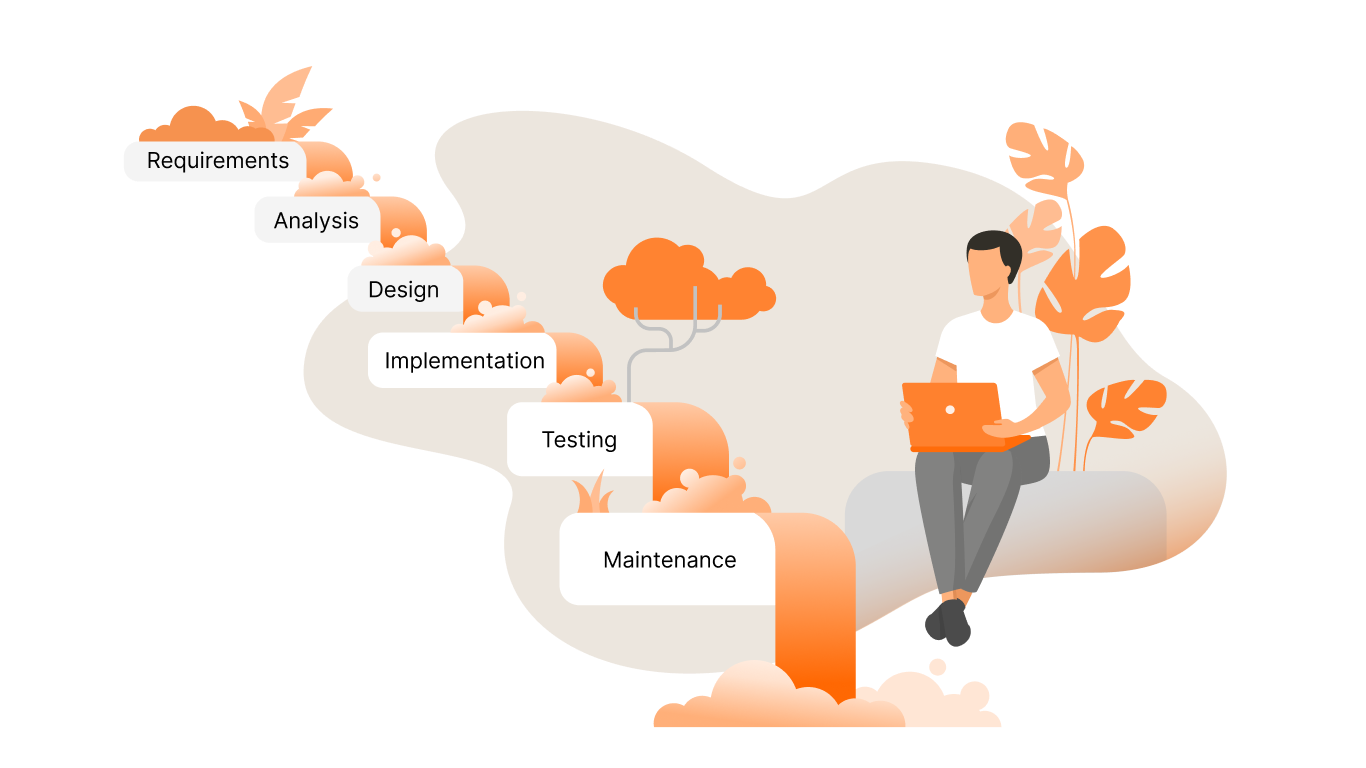
PMBOK 6, published in 2017, is a classic. It’s a kind of “time machine” that allows you to see what project management looked like in the era of the waterfall approach. Its main characteristics:
- 49 processes grouped into 5 process groups: initiation, planning, execution, monitoring/control, and closure.
- 10 knowledge areas—from scope and time management to risks and stakeholders.
- Process-oriented approach: each project is divided into processes that have inputs, tools/techniques, and outputs.
- Strong structure, detailed documentation, clear planning—this is what PMBOK 6 is based on.
This approach was ideal for predictable projects—for example, construction, where everything needs to be calculated in advance and changes avoided.
What’s New in PMBOK 7?
PMBOK 7, released in 2021, changed the game. It’s no longer just a process reference—it’s a thinking framework that puts customer value at the center. Here are its main innovations:
- No more 49 processes. Instead—12 project management principles that help make decisions in any environment.
- Introduced 8 performance domains: stakeholders, team, development approach and life cycle, planning, project work, delivery, measurement, and uncertainty.
- Main idea—flexibility and adaptability: doesn’t impose specific processes, but gives space for creativity and method selection.
- Approach focused not on “how to do the process” but on “how to create value” for the client.
In other words, it’s not an “instruction” but a “philosophy”.
Differences Between PMBOK 6 and 7
| Characteristic | PMBOK 6 | PMBOK 7 |
| Focus | Processes and sequence of actions | Principles, performance, and value |
| Structure | 49 processes in 10 knowledge areas | 12 principles + 8 performance domains |
| Approach | Rigidly structured, formal | Flexible, result-oriented |
| Suitability | Mainly waterfall projects | Suitable for agile and hybrid models |
| Documentation | Clear, mandatory | Minimal, as needed |
| Goal | Control and resource management | Maximizing value for stakeholders |
Imagine that PMBOK 6 is “furniture assembly instructions,” and PMBOK 7 is “a set of principles for creating a comfortable interior.” Both are needed, just in different situations.
What to Choose: When to Use PMBOK 6 and When PMBOK 7?
This question concerns many practitioners. And the answer is: there’s no single correct option. Both approaches have a right to exist—it depends on the context.
When to choose PMBOK 6:
- You work in a formal structure—government agencies, banks, large corporations.
- The project has clear requirements that don’t change.
- You need to carefully document every step.
When PMBOK 7 is better:
- Your environment is dynamic, full of changes.
- You practice Agile, Scrum, or Kanban.
- Customer orientation is important, not process orientation.
By the way, PMI recommends combining approaches—and this is probably the smartest solution. Use PMBOK 6 structure for processes that require formalization, such as budget planning, risk management, and procurement. At the same time, engage PMBOK 7 flexibility in daily work with the team, stakeholder communication, and adaptation to changes. This will allow you to build a hybrid management system that best matches the specifics of your particular project.
Conclusion
Does PMBOK 7 really displace previous approaches? No. It’s not a replacement, but an evolution. Like the transition from black-and-white TV to modern smart TV—the function is the same, but there are more possibilities.
For project managers, this means freedom. You can adapt approaches, combine tools, and work more effectively. PMBOK 7 doesn’t dictate but inspires—to think strategically, act flexibly, and focus on results.
And if you’re preparing for the PMP exam—remember: knowledge of both approaches remains relevant. PMBOK 6 will help you structure your thinking, and PMBOK 7 will teach you to work in a modern context.
Which approach will you choose? Are you ready for the new wave of project management?